
Screened Porches That Keep Insects Out
Screened Porch Construction in Maple Grove for homeowners who want outdoor seating without dealing with mosquitoes or flies during warm months
Premier Custom Decks builds screened porches that extend your indoor living area into a protected outdoor space where you can sit without swatting insects or closing windows when the temperature rises. These structures are framed using treated lumber or composite materials, with walls filled by durable screen panels held in place by aluminum or vinyl channels. The roof ties into the existing house structure or stands independently with posts and beams that support shingles or metal roofing. Screened porches work well on flat yards where the foundation can be poured at grade, or as elevated structures that connect to second-story doorways and align with upper-floor living spaces.
The screening material is tensioned to prevent sagging and secured to resist tearing when wind gusts push against the panels. Doors are installed with spring closers to keep the entry sealed when people move in and out, and thresholds are built to shed water rather than trap it against the framing. Electrical rough-ins are coordinated with licensed contractors so you can add ceiling fans, recessed lighting, or outlets for lamps and electronics. The finished porch becomes a room where you can sit during summer evenings, eat meals without covering food, and leave doors open without inviting pests inside.
If you are looking to add a screened porch that complements your home and provides a sheltered place to spend time outdoors, contact the team to review your site and discuss framing, roofing, and screen installation options.
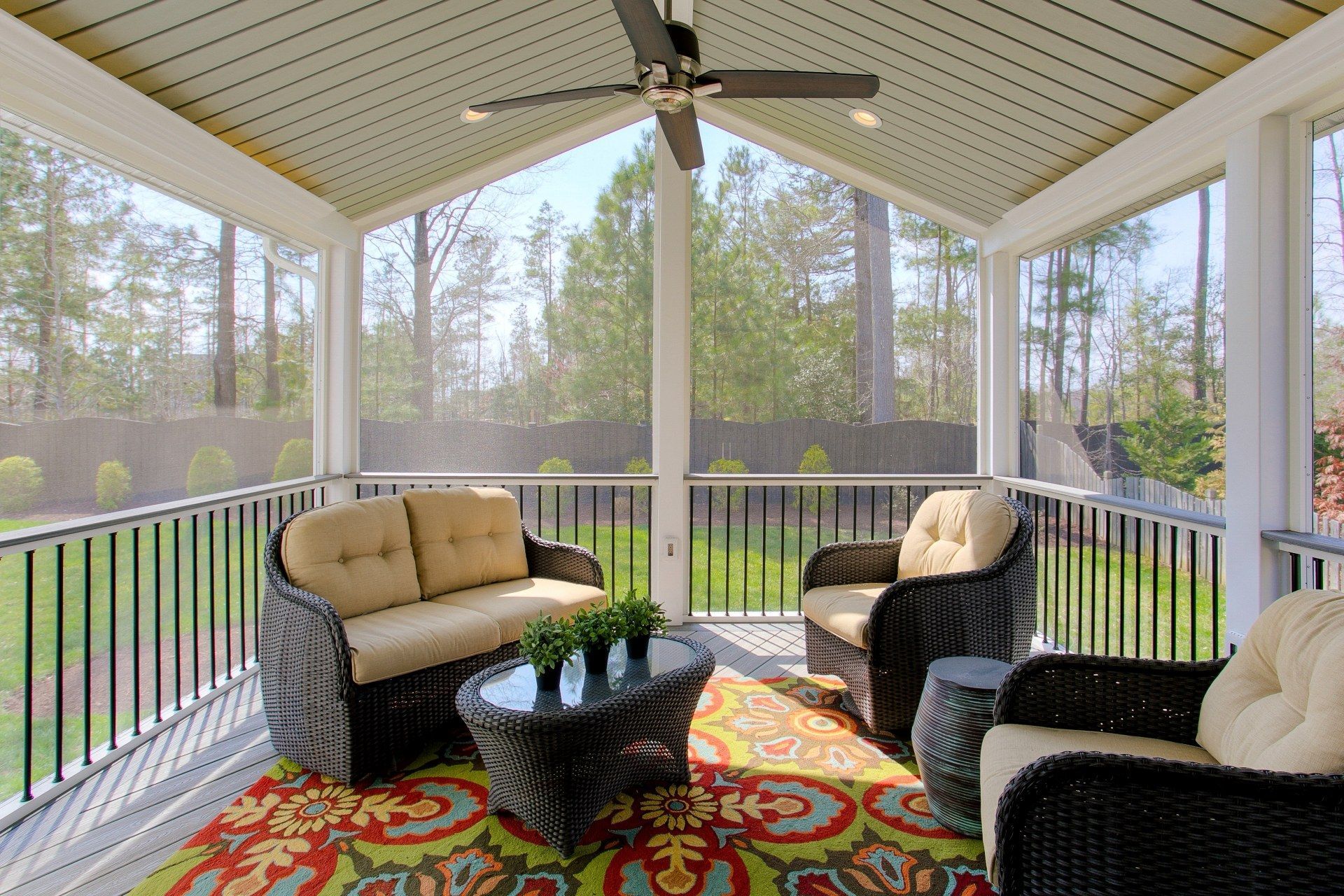
How Screened Porches Are Framed and Enclosed
Construction starts with setting a foundation that matches the soil conditions and drainage around your home, typically a concrete slab or a deck-style frame with piers below the frost line. Vertical posts are placed at corners and intervals along each wall, and horizontal rails are installed to hold the screen panels at the correct height. The roof framing connects to the house ledger board or rests on freestanding posts, with rafters pitched to shed rain and snow away from the screen walls. Screening is stapled or rolled into channels, then trimmed and secured to prevent movement.
When the project is complete, you will have a porch with solid footing, a weatherproof roof, and screen walls that allow air to flow while keeping out mosquitoes, flies, and larger debris like leaves and seeds. Premier Custom Decks designs each porch to match the style of your home, whether that means replicating trim details, matching roof pitch, or aligning windows and doors with existing openings. The interior becomes a usable space for furniture, potted plants, or storage that does not need to be moved when rain starts.
Options include adding knee walls for privacy, installing removable screen panels for seasonal use, or building a combination of screened and solid walls to block wind from a specific direction. The team does not install HVAC systems or gas lines, but can frame spaces for contractors to add those features later. Each porch is built to handle weight from hanging plants, ceiling fans, and furniture without flexing or shifting during use.
Common Questions About Screened Porch Projects
Homeowners frequently ask about screen durability, foundation requirements, and whether the porch can be used during cooler weather in Maple Grove.
What type of screen material is used?
Most porches use fiberglass or aluminum screening, both of which resist rust and tearing under normal use, though aluminum is stronger and less likely to stretch when bumped or pressed.
How do screened porches handle winter weather?
The structure remains intact through snow and freezing temperatures, but the screen itself may collect ice or need seasonal panels installed to block wind if you plan to use the space during colder months.
When should a screened porch be built on a concrete slab versus a raised deck frame?
Slabs work best on level ground with good drainage, while raised frames are necessary on sloped yards or when the porch needs to connect to an elevated doorway on the home.
How is the roof attached to the house?
A ledger board is bolted to the exterior wall and flashed to prevent water from entering the home, with rafters extending from the ledger to support shingles or metal roofing that matches the main roof.
Why do some porches include knee walls?
Knee walls add privacy, block low-angle sun or wind, and provide backing for furniture placement without obstructing upper airflow through the screens.
If you want a screened porch that keeps bugs out and gives you a comfortable place to sit outside, reach out to Premier Custom Decks to discuss framing options, roofing connections, and screen types that suit your property and how you plan to use the space.