
Stairs That Connect Levels Safely
Deck & Porch Stair Construction in Maple Grove for homeowners who need safe, code-compliant stairs that connect outdoor structures to ground level or between platforms
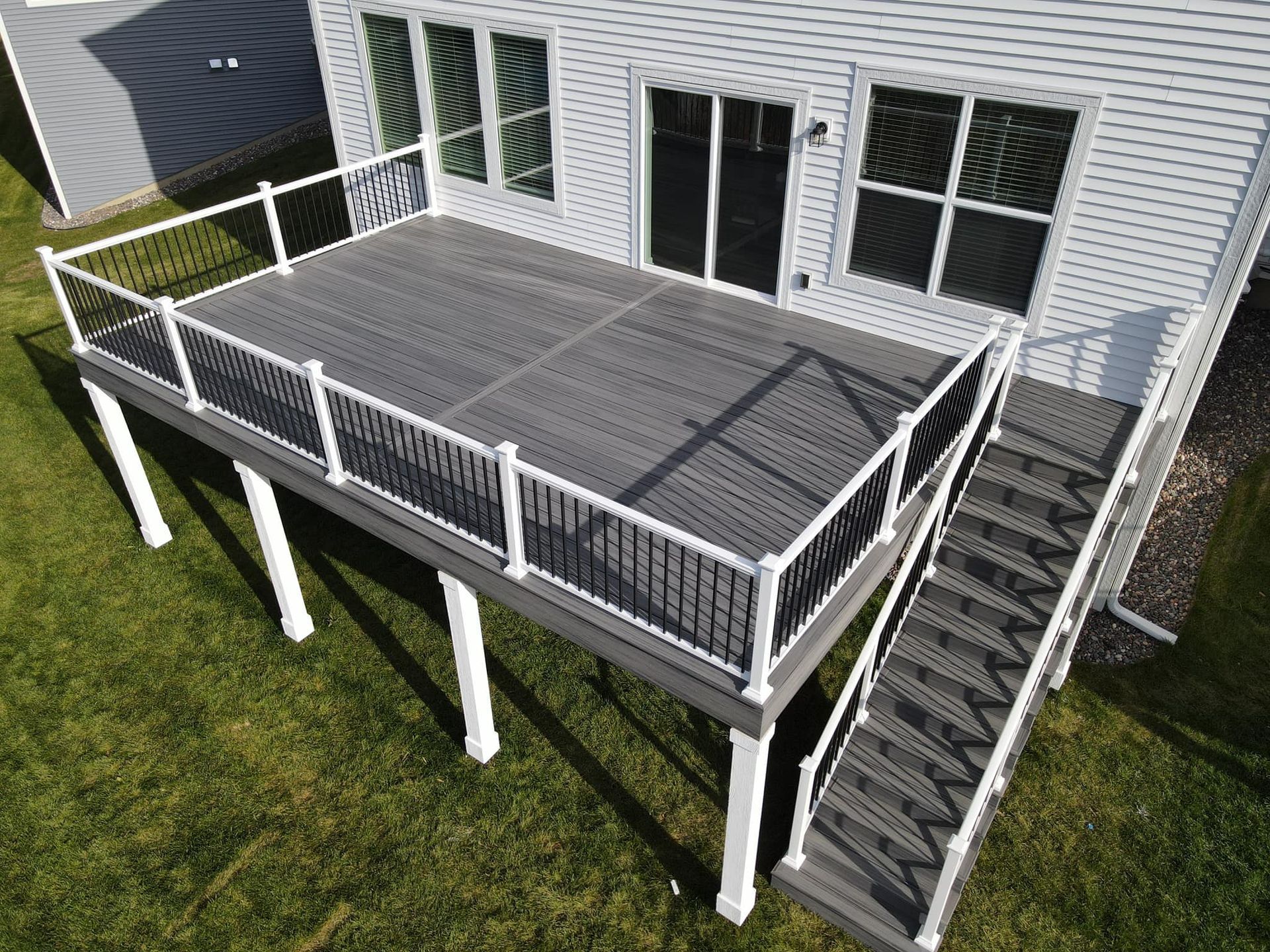
Premier Custom Decks builds custom stairs for decks and porches, starting with calculating the total rise from the ground to the platform and determining the number of steps required to meet building code limits for riser height and tread depth. Stairs are framed using either cut stringers notched to hold each tread or solid stringers with treads mounted on cleats, depending on the design and load requirements. The team uses pressure-treated lumber or composite materials for treads, and installs railings with balusters spaced to prevent falls and provide a handhold for anyone using the stairs.
Stair construction takes into account the width needed for furniture moving, the landing space at the top and bottom, and the slope of the ground where the stairs will rest. Treads are fastened securely to prevent shifting, and risers are added when the design calls for a closed appearance or additional structural support. Railings are through-bolted to the stringer or deck frame to handle lateral pressure from users leaning or grabbing during wet or icy conditions. The finished stairs provide a safe, stable path between levels that meets local code requirements and blends with the style of the deck or porch.
If you need stairs for a new or existing deck, or want to replace worn or unsafe steps, contact the team to review your project and discuss materials, railing options, and code compliance.
What Makes Deck Stairs Safe and Durable
Stair construction begins with measuring the vertical distance from the deck surface to the ground and dividing that measurement by the maximum riser height allowed by code, typically around seven to eight inches. The number of steps is calculated to ensure consistent riser height, and tread depth is set to provide enough surface area for a full foot placement, usually at least ten inches. Stringers are cut from dimensional lumber and attached to the deck frame using joist hangers or bolted connections, and treads are screwed down with spacing that allows water to drain without creating gaps large enough to catch heels.
When the work is complete, you will have stairs that feel solid when you step on them, do not bounce or creak under weight, and provide a predictable rhythm as you move between levels. Premier Custom Decks builds stairs that meet the same standards as the main deck structure, using treated lumber that resists rot and hardware that holds up through freeze-thaw cycles. The finished stairs become a permanent part of your outdoor structure, allowing you to move between the deck and yard safely without needing temporary fixes or frequent repairs.
Stair projects can include custom railings that match the deck or porch design, landings that change direction, or wider treads for commercial-style applications. The team does not install handrails inside the home or work on interior staircases, but can coordinate stair placement with pathways, patios, or other landscape features. Each stairway is built to the specific height and width required by your deck layout and the code standards that apply in Maple Grove.
Stair Construction Questions for Deck Owners
Homeowners often ask about code requirements, material differences, and how to ensure stairs remain safe during wet or icy weather.
What is the maximum riser height allowed for deck stairs?
Building codes typically limit riser height to around seven and three-quarter inches, with consistent measurements required across all steps to prevent tripping hazards.
How wide should deck stairs be?
Most residential deck stairs are at least 36 inches wide, providing enough space for one person to walk comfortably or for two people to pass when moving furniture or large items.
When do stairs require railings?
Railings are required when stairs have more than a certain number of risers, usually three or four, and must include a graspable handrail that runs continuously along the stair run.
How are stringers attached to the deck?
Stringers are bolted or hung from the deck rim joist using metal connectors, and the bottom ends rest on a concrete pad or gravel base that prevents sinking and shifting over time.
Why use composite treads instead of wood?
Composite treads resist splintering, require less maintenance, and provide better slip resistance when wet, though they may cost more upfront than traditional lumber.
If your deck or porch needs stairs that meet code and hold up through daily use, reach out to Premier Custom Decks to schedule a visit and discuss stringer design, tread materials, and railing systems that work with your existing structure.