
Docks Built for Waterfront Access
Dock Construction & Repair in Maple Grove for homeowners with lakefront or pond access who need a stable structure for boats, swimming, and waterfront activities
Premier Custom Decks builds custom docks for residential waterfront properties, starting with an assessment of water depth, bottom composition, and shoreline conditions that affect how the dock is anchored and how far it extends into the water. You may need a simple straight dock that reaches deeper water for boat access, or an L-shaped configuration that creates a protected area for kayaks and paddleboards. The team selects materials designed to withstand constant moisture, UV exposure, and temperature swings, including treated lumber, composite decking, and galvanized or stainless steel hardware that resists corrosion.
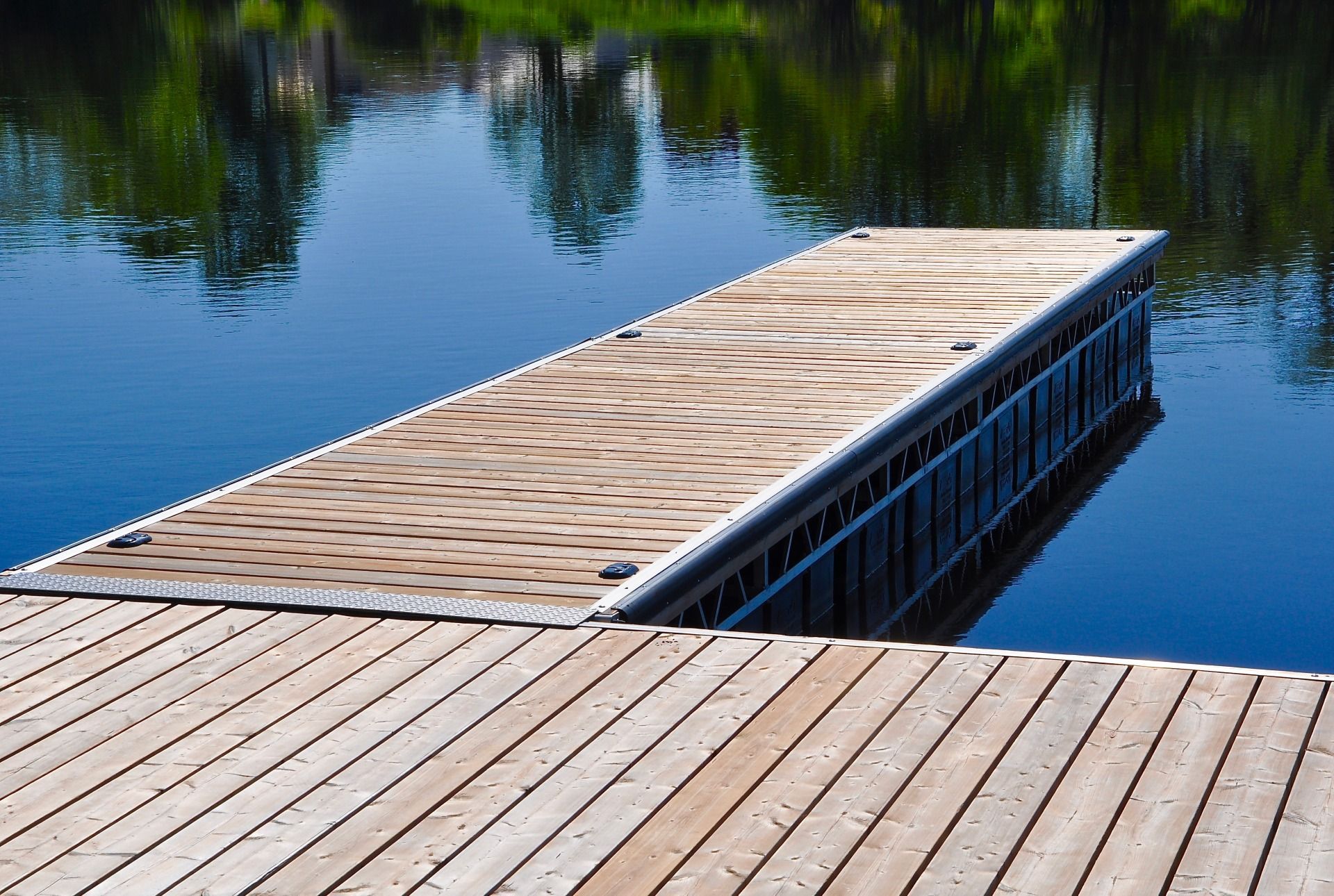
Docks are built using either fixed pilings driven into the lakebed or floating sections supported by pontoons that adjust with water level changes. Fixed docks provide stability for heavy boats and permanent installations, while floating docks move with the water and are easier to remove for winter storage. The walking surface is framed to support foot traffic and equipment weight, with railings or cleats added where needed for safety and boat tie-offs. Each dock is constructed to handle the specific activities you have in mind, whether that means loading fishing gear, launching personal watercraft, or sitting at the water's edge.
If you need a new dock or want to extend or repair an existing structure, contact the team to review your waterfront conditions and discuss materials, anchoring methods, and layout options.
How Docks Are Constructed and Secured
Dock construction begins with surveying the shoreline and measuring water depth at intervals to determine where support posts or flotation devices will be placed. For fixed docks, pilings are driven into the lakebed using a hydraulic post driver, and crossbeams are bolted to the tops of the posts to create a level frame. Decking boards are fastened to the frame with spacing that allows water and debris to pass through without creating slipping hazards. Floating docks are assembled on shore, then moved into position and anchored using cables or chains attached to concrete blocks or auger anchors embedded in the bottom.
When the work is finished, you will have a dock that remains stable when you walk to the end, does not shift or wobble when boats bump against it, and provides a secure platform for entering and exiting the water. Premier Custom Decks builds docks that resist rotting, splintering, and metal corrosion, so the structure holds up through repeated exposure to water and seasonal freezing. The finished dock becomes a functional access point that makes waterfront activities easier and safer without requiring immediate repairs.
Dock projects can include adding sections to extend reach into deeper water, replacing damaged boards or support posts, or reinforcing the frame to handle heavier loads. The team does not install boat lifts or electrical wiring for lighting, but can coordinate framing and placement to accommodate those features when installed by specialists. Each dock is planned around the specific water conditions at your property, including wave action, ice movement, and sediment type that affects anchoring methods.
Dock Questions for Maple Grove Waterfront Owners
Homeowners with lake or pond access often ask about material choices, anchoring systems, and whether docks need to be removed during winter.
What type of wood is used for dock construction?
Pressure-treated lumber rated for water contact is the standard choice, though composite decking is also used for the walking surface to reduce splinters and maintenance needs.
How are floating docks anchored?
Floating docks are secured using cables or chains attached to anchors on the lakebed, allowing the dock to rise and fall with water levels while staying in position.
When should a dock be removed for the winter in Maple Grove?
Many homeowners remove floating docks before ice forms to prevent damage from shifting ice, though fixed docks with proper bracing can remain in place if designed to handle freeze-thaw cycles.
How deep does the water need to be for a fixed dock?
Fixed docks work best in areas where the water is at least three to four feet deep at the end of the structure, providing enough clearance for boats and swimmers without scraping the bottom.
Why do some docks use galvanized hardware instead of stainless steel?
Galvanized hardware costs less and resists corrosion in freshwater environments, while stainless steel is preferred for saltwater or when maximum longevity is required.
If you are planning a new dock or need repairs on an existing waterfront structure, reach out to Premier Custom Decks to schedule a site visit and discuss materials, anchoring systems, and layout options that suit your property and how you use the water.